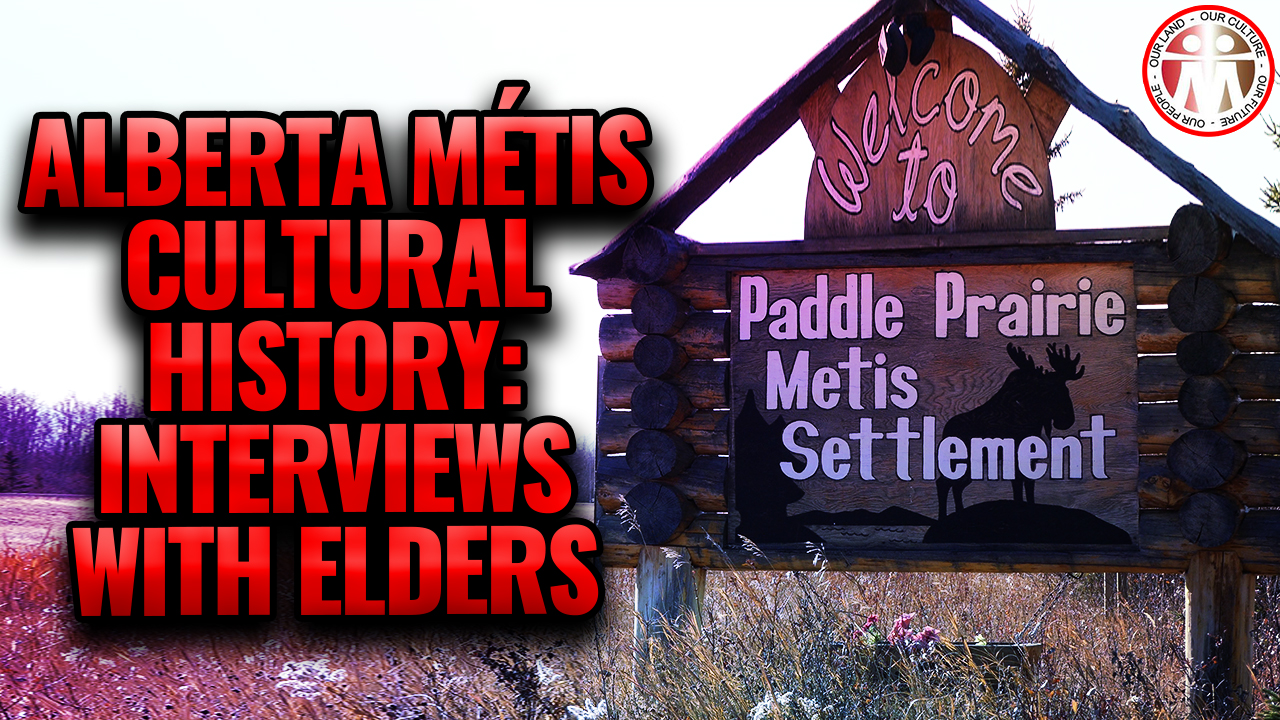
Within the rich lineage of Alberta Métis Cultural History and indigenous history overall, Frank Ghostkeeper offers up his own experiences.
Ghostkeeper went to school in McLennan as well as High Prairie and ended up in Paddle Prairie a bit later on. During the times of residential schools, Ghostkeeper was on a farm so he said he remained unbothered by all of that.
When in Paddle Prairie hunting and trapping became favorite activities for Ghostkeeper. While obviously not there in the early days of 1938-1939 when the first settlers came in, Ghostkeeper does have historical insights.
He said, ” Aldophus Ghostkeeper is the one kind of assisted my grandfather into moving in here and moving over here. They worked together somehow to find my grandfather land. Which they eventually… my grandfather bought Pete Hooks, his house over there with Peter Hooks, and that’s how. I don’t know how it worked. They were contacting each other, my grandfather and Adolphus, to find him land, farmland. My grandfather wanted to farm with my dad.”
The industrial side of things shined through early on in PPMS with the sawmills and the oil boom being prevalent. Ghostkeeper used to fish a lot on the Peace River. Described being once able to catch fish right there and eat it but nowadays sees the river as being all polluted.
Alberta Métis Cultural History
Knowledge of how to find the right hunting grounds is such key knowledge that grows with time leading the PPMS lifestyle. Also, utilizing every single part of an animal so it never goes to waste is imparted on local hunter/ gatherers.
Ghostkeeper said, “Well, I guess you’re not going to make all the tools, but I try really, getting all the meat off from the bottom. All that meat down there, I smoke all that. All that I call that hard times food. So then I go up and into all that and go to the back strap. That doesn’t make good fried meat, but that makes the best-dried meat of the whole moose. So they could stretch off up to a four feet from the back strap if you cut it right. On both sides.”
Ghostkeeper continued, “Like the front quarter, there isn’t really much meat on the front quarter. Maybe four good-sized pieces to [drive me through] a front quarter. There again you could take the bones. No, the pieces there are used for hunting. I don’t use mine. In Paddle, we drive that and I obviously hang it where the Magpies cleaned it off and the [burtle] birds. I strip off all the meat and everything that they cleaned the bone right up. And that’s what I use it that moose antler. Rub it on the trees or willows. To call when you’re calling moose. So that’s what I use up for.”
Paddle Prairie Metis Settlement
When asked if his “traditional Michif language is still important” to him?, Ghostkeeper stated, “Yeah, it is fresh for me just to have a French in there because a lot of us use that Cree with all the French words in there. So especially me. I grew up with French people. Understood quite a bit of French back in the day. I spoke a little bit of French. We had to take French as one of our languages.”
Finally, when asked “how can we work together to ensure Paddle Prairie has a bright future and path forward?”, Ghostkeeper quipped, “Let’s go out to start working on workshops. Depending on what maybe we should talk to the kids. What would they like to learn. Learn how to make the stretchers, trap, and get them to do hard stuff. Like I could bend willows to make a beaver stretcher. You could even use a little for a Martin and when it comes down to hard times, you’d have to do that back in the day. Especially for Beaver. Because you can’t walk in the Bush with plyboard on your back (laughs).”
Liberty Multimedia Inc. and Paddle Prairie Métis Settlement would like to thank Alberta Culture for its support of these interviews and dedication to preserving Alberta’s history.
Leave a Reply