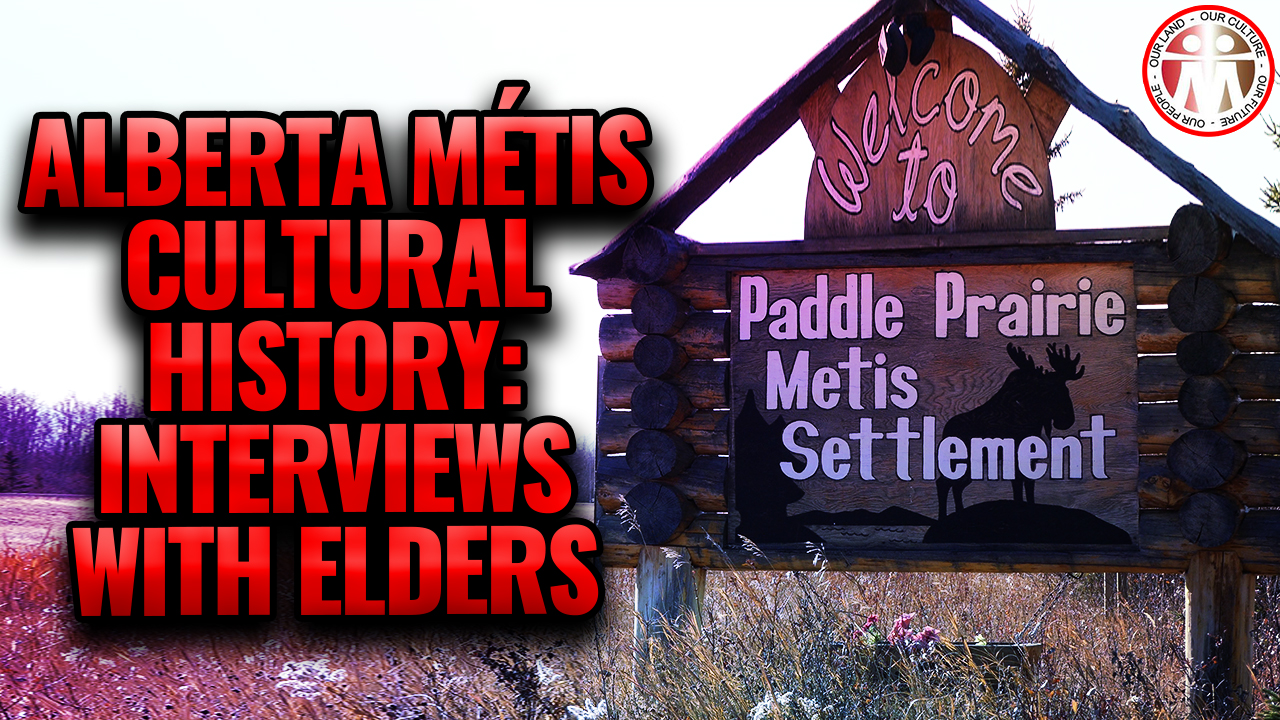
Within the rich lineage of Alberta Métis Cultural History and indigenous history overall, Brenda Farnel offers up her own experiences.
When asked “who are the Metis people?”, Farnel touched on the complexities that can come with answering a question like that. She said, “We’re not treaty. The only treaty we had was my grandma. But she lost her rights when she married my grandpa, who was Romanian. It took dad and them quite a while to be able to get their Métis rights because of Grandpa and Grandma.”
The importance and pride of being interwoven into that culture very much resonated when Brenda stated, “You’re born a Métis, you die a Métis.”
Alberta Métis Cultural History
Farnel moved to Paddle Prairie at the age of 12 and spoke fondly of her upbringing. Things like hide and go seek on horseback as well as horse races in her upbringing there.
From Farnel’s understanding, her grandfather John Christian and grandma Marie Christian were among some of the earliest settlers even before Paddle Prairie was declared a Metis settlement. Farnel’s father, George Christian later returned to the area after his parents were forced to leave and proceed to Carcachew.
As far as Metis cultural practices Farnel enjoyed, beading and jigging were prominent activities that came to mind. As far as hunting and fishing stories, the kids would accompany dad and help out. That could mean helping bring the moose. Also setting snares for rabbits or plucking duck and geese, it was a real family contribution.
A key part of properly hunting is to make sure that no part of the animal goes to waste. This was conveyed by Farnel who said, “From the Elders, passed down to and being taught to the younger ones, to the youths and show respect to, you know your land, show respect in regards the wildlife. You know, the moose, the deer. There are people that do eat that all of that here within the community. But you know, be considerate as to what you get and just, you know, for your family. Like before I know, if anybody killed anything they shared with their family, they shared with the community.”
Paddle Prairie Metis Settlement
Gathering of saskatoons, raspberries, choke cherries was also done for the purposes of creating jams and jellies. Traditional medicines were also prevalent in gathering practices as indicated when Farnel stated, “I know that muskeg tea is good for cancer. Another thing that could be used, and I’ve a couple other people I’ve told about, is that the chokecherry bushes, the branches and the bark off of that is supposed to also be good for memory and physical health. You boil it, but it’s really. Powerful stuff, you know, like you’re bitter when you. And that is good. What else could that we’ve I’ve used here or has been used is dandelions.”
In terms of traditional parenting in the settlement, the kids were taught legends. Localized stories that were used to impart important life lessons.
In terms of tradition when asked “Is your traditional Mischif language still important to you and why?”, Farnel quipped, “It is, and I wish I could really speak it. I do understand it a lot, but I’m…and for when, as I was growing up, we were told not to talk Cree. If they wanted to do or say something or didn’t want us to know about it, they’d spoken Creek. And you know so. As I got older and I’m like OK, I need to learn this, you know. So to me it is very important we should have you know, as far as I’m concerned, It should have been enforced on to us, but at that time it was withheld.”
Liberty Multimedia Inc. and Paddle Prairie Métis Settlement would like to thank Alberta Culture for its support of these interviews and dedication to preserving Alberta’s history.
Leave a Reply