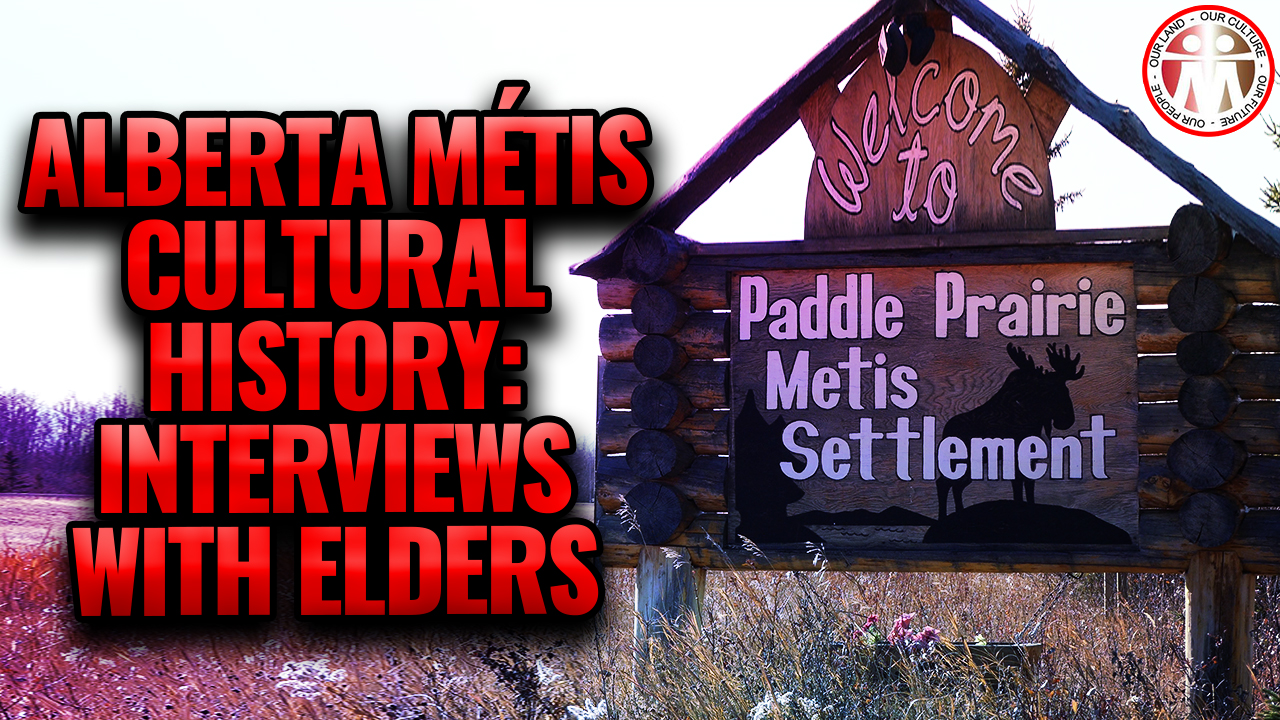
Within the rich lineage of Alberta Métis Cultural History and indigenous history overall, Adolphus Auger offers up his own experiences.
When posed the question “who are the Metis?”, Auger stated, “I don’t know, part Indian and part white, mixed blood yeah.”
When asked “what was it like having to travel from where you were to Paddle Prairie?”, Auger said, “it was hard, there was nothing, nobody was here.”
Though everything had to be built from the ground up, there was also a sense of it being a blank canvas. A community that can be completely crafted in their vision which likely instills a strong sense of pride despite the intrinsic difficulties.
Adolphus saw the autonomy of his youth as a Metis cultural practice; a sense of doing things yourself. “Yes, cus there was how many of us there.”, Adolphus stated, “We had to do everything by ourselves.”
Alberta Métis Cultural History
Cultural intuition that couldn’t be measured by science also came in the form of knowing if it will rain by assessing the land. Observing the clouds and plunging a knife into the ground whereby the clouds parted thereafter indicated rainy weather was forthcoming.
In terms of hunting and fishing stories, much of that came from Adolphus’ brothers. He didn’t really care for being in the bush as he did not know how to navigate it well. Adolphus was adjacent to the process though and assisted in his own way. He said, “When they get a moose I help them. Skin it, cut it up, haul it out of there.”
Paddle Prairie Metis Settlement
Auger also stressed the importance of sharing the meat and making sure to use all of it. So as to not have anything go to waste.
In terms of not letting things go to waste, when asked “what is the most important thing you would want to preserve for future generations?”, Auger prioritized communciation and music. He said, “The Cree language. We always talked Cree when we grew up, all the time. My brothers used to play violin.”
Lastly, when asked ” how can we work together to make sure Paddle Prairie has a bright future?”, Adolphus quipped, “Yeah everybody at the house would talk Cree and kids would go to school. That’s where they learned to talk English. Yeah, nobody talks Cree to them. That’s why they don’t want to talk Cree. They are talking English now. Once you start talking English, you just want to talk English. That’s why they lose their Cree language.”
Liberty Multimedia Inc. and Paddle Prairie Métis Settlement would like to thank Alberta Culture for its support of these interviews and dedication to preserving Alberta’s history.
Leave a Reply