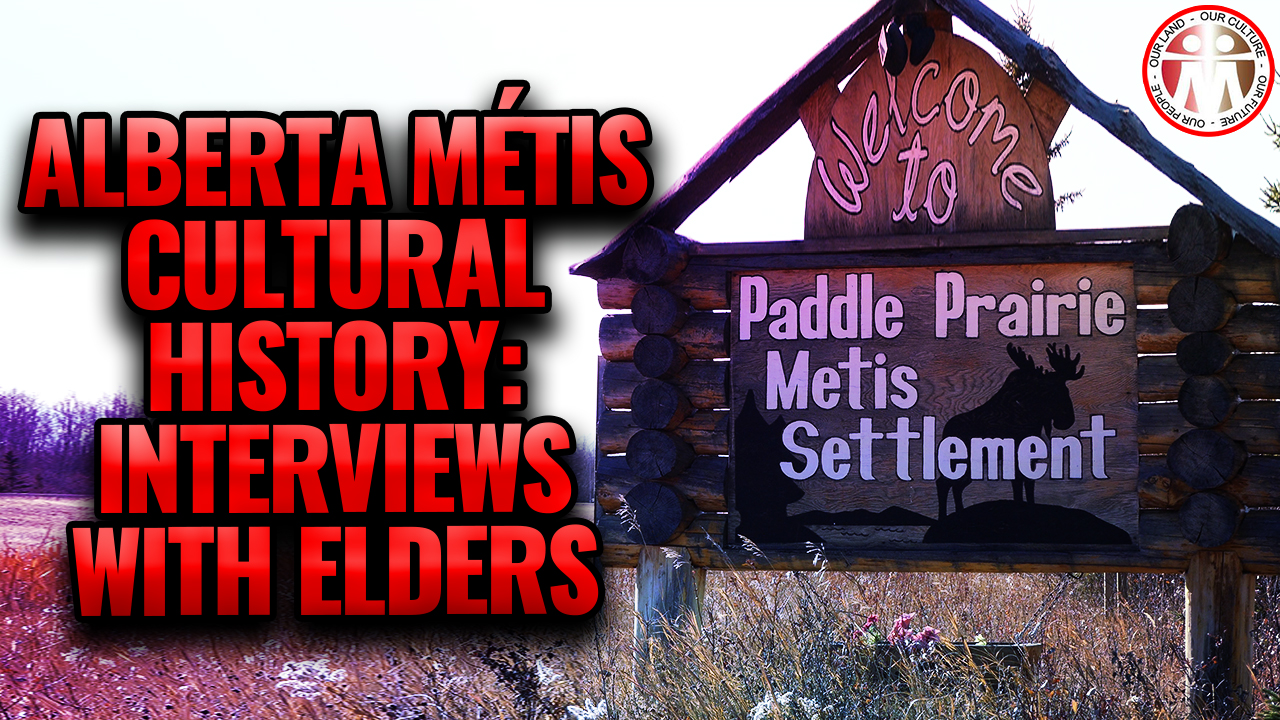
Within the rich lineage of Alberta Métis Cultural History and indigenous history overall, Doreen Batchlor offers up her own experiences.
When asked “who are the Metis people?”, Batchlor said, “Métis people were people that had that; have two generational family. There’s European, the white, and First Nation. The man usually married a first nation woman, and so became the Métis people. Other than that the Government gave them settlements where they reside in.”
Early memories of the settlement involved berry picking as well as riding the horse and wagon with her parents. Batchlor recalls a real sense of community where people shared frequently, uplifting each other, and hard work underpinned a culture of youth respecting their elders.
As far as the earliest members into this great place, Batchlor has insights into the progenitors of the Paddle Prairie Metis settlement community.
Batchlor said, “Ok, I know my grandfather John Christian was in Paddle Prairie and he was Romanian, not Métis. And there was a few others, but I’m not sure of the names and when Paddle Prairie became a colony, they had to move out. That was my grandpa and your grandpa, John Christian, John and Marie Christian. So I think they were … there at that point and then they had, they were bought out and then they moved to Keg River.”
Alberta Métis Cultural History
Farming was bountiful early on but challenges emerged with having to travel outside of the community for basic amenities from stores and to see a health care physician.
Jigging to a lot guitar playing was an important Metis cultural practice. Trapping was also important to Batchlor in the context of hunting and fishing stories that resonate well as memories. The importance of the multiplicity of use with hunted animals came in the form of tanning hides, beaver pelts, etc beyond just consuming the meat.
In terms of how to prevent overhunting or overfishing, Batchlor said, “You never shot like 2 or 3 moose or whatever, you know? Took what you can use and so never ever shot a female moose with a little one or in the spring when they’re carrying their little ones. Same with a beaver if it had a kit. You would try not to do a spring hunt, sure. But you only took what he needed and if you overtook something then the population of those animals would go down. They’d be few and far between. You don’t see as many moose out there anymore, and any of the wildlife for that matter. Uh, yeah, they are far between nowadays.”
Things like wild peppermint and rat root proved to be highly beneficial as medicines. The positioning of the moon could also offer insights into what the next day’s weather would look like at PPMS.
Paddle Prairie Metis Settlement
In terms of culturally important facets of life, when asked “is your traditional Michif language still important to you and why?”, Batchlor said, “Yes, it’s very important and I’ve taught it in the school in Paddle Prairie. But it’s a lost language. (A) lot of my generation still has it, but it hasn’t been practiced down in generation, yeah. They may know some words that they may might pick up a few words here and there, but not conversational wise.”
Finally when posited the question “how can we work together to ensure Paddle Prairie has a bright future and path forward?”, Batchlor quipped, “I think the people of Paddle Prairie have to work together without conflict, which is going to be hard. And keep trying to get ahead because Paddle Prairie can prosper. It’s one of the largest, you know, it’s the largest settlement of Alberta. And there could be many things that can be done in the settlement and improve. But it has to start with the people.”
Liberty Multimedia Inc. and Paddle Prairie Métis Settlement would like to thank Alberta Culture for its support of these interviews and dedication to preserving Alberta’s history.
Leave a Reply